This is one of those things that looks fine… until it really, really isn’t.
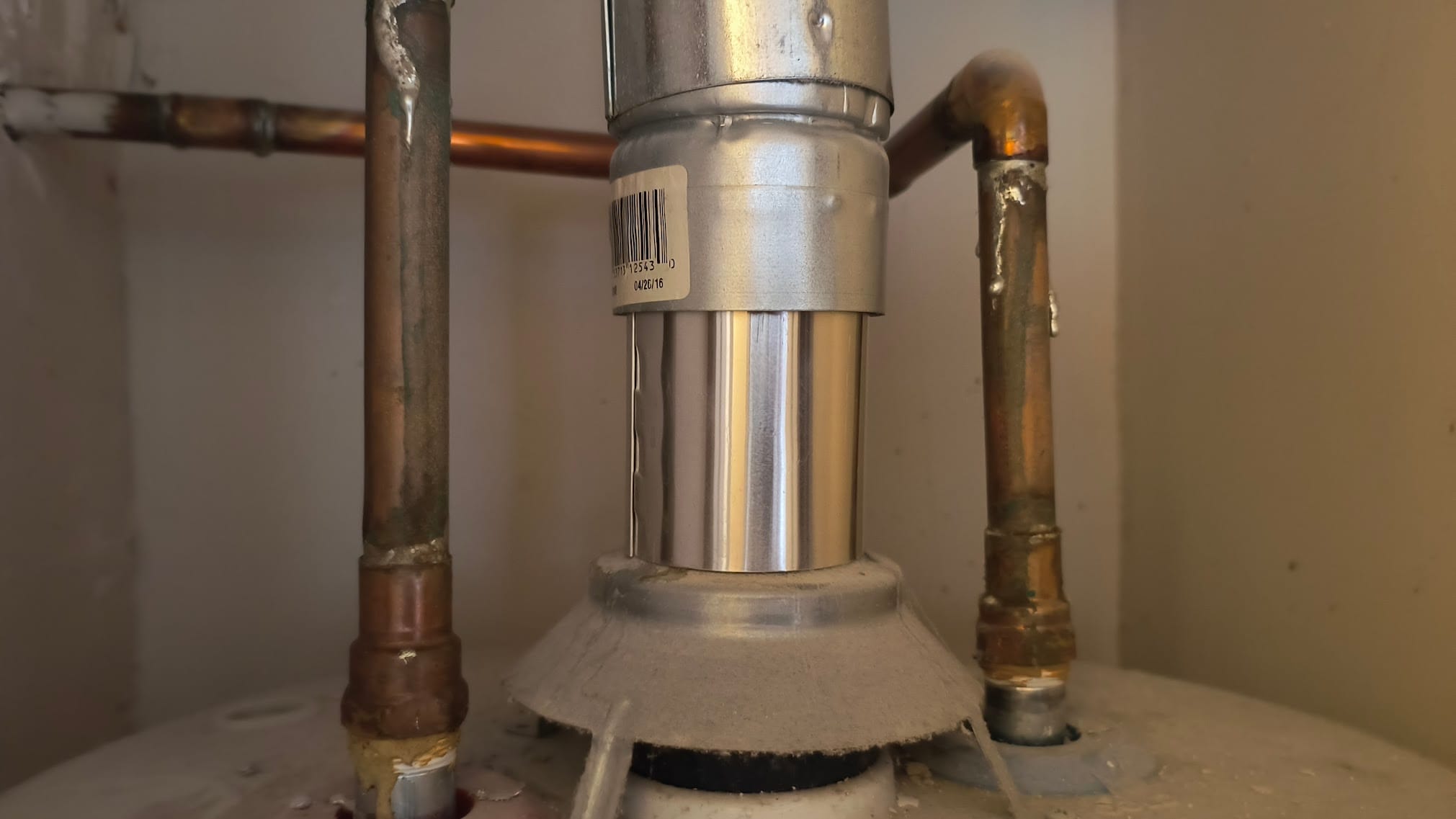
Gas water heaters don’t complain loudly when something’s wrong. They don’t leak right away. They don’t trip breakers. They just keep burning — and if the exhaust isn’t leaving the house the way it should, that’s a problem you won’t see without looking for it.
What Backdrafting Actually Is
Backdrafting happens when exhaust gases don’t go up and out like they’re supposed to.
Instead, they:
- Spill back into the room
- Linger near the appliance
- Mix with indoor air
- Carry carbon monoxide with them
The flame still burns. Hot water still shows up at the tap. Meanwhile, combustion byproducts are going the wrong direction.
Why This Gets Missed So Often
Most water heaters live in places people don’t hang out:
- Utility rooms
- Garages
- Basements
- Closets
Nobody’s standing there long enough to notice subtle air movement or smell exhaust. And because the unit still “works,” it doesn’t raise suspicion.
I’ve seen plenty of homes where the water heater was backdrafting quietly for years.
The “Match Test” (And What It Really Tells Me)
During an inspection, I’ll often do a simple draft check using smoke — sometimes from a match, sometimes a smoke pen.
I’m not lighting things on fire for fun. I’m watching air movement.
If smoke:
- Pulls smoothly into the draft hood → good sign
- Hovers or spills outward → problem
- Gets blown back into the room → definite concern
It’s not a lab test, but it’s a quick reality check.
A Real Inspection Where the Draft Told the Truth
I inspected a home near Paris, TN where the water heater vent looked fine at a glance. Proper-looking B-vent. No obvious disconnections.
But when the heater fired up, smoke pushed back into the room instead of rising.
The issue wasn’t the heater — it was negative pressure. A newer, powerful exhaust fan elsewhere in the house was stealing the draft.
Everything “looked” right. The air didn’t care.
Common Causes I See
Backdrafting usually isn’t one single mistake. It’s a combination.
Typical contributors:
- Improper vent sizing
- Shared flues done wrong
- Blocked or partially blocked vents
- Cold flues on startup
- Negative pressure from exhaust fans
- Tight houses with no makeup air
Older homes and newly remodeled homes both show this — for different reasons.
Why Cold Starts Are the Most Dangerous
Many backdrafting issues show up right after startup.
The flue is cold. The draft hasn’t established yet. Exhaust spills until things warm up.
That’s when CO enters the space — before anyone realizes what’s happening.
I’ve reviewed inspection notes from one of our inspectors in the Clarksville area where repeated cold-start backdrafting was documented in a tight, recently renovated home.
No alarms had gone off. Yet.
Why CO Detectors Don’t Make This “Okay”
CO detectors are important. They’re not a solution.
By the time a detector alarms:
- CO is already present
- Occupants may already be affected
- The system is already failing
The goal is proper venting — not relying on an alarm to warn you after the fact.
What I Actually Look For During an Inspection
I’m evaluating:
- Vent connector slope
- Draft hood condition
- Clearances
- Signs of corrosion or spillage
- Soot or discoloration
- Air movement during operation
If I see evidence of spillage or backdrafting, it gets called out clearly — even if the heater is otherwise functioning.
Why “It Passed Before” Doesn’t Matter
Drafting conditions change.
New exhaust fans. New windows. Added insulation. A remodeled kitchen. Even weather conditions.
A system that drafted fine five years ago can struggle today.
I don’t care what it did in the past. I care what it’s doing now.
What Buyers Should Understand
Backdrafting isn’t cosmetic. It’s not theoretical.
It’s a combustion safety issue that deserves attention — especially in homes with gas appliances in enclosed or interior spaces.
Sometimes the fix is simple. Sometimes it isn’t. But ignoring it is never the right call.
The Inspector’s Bottom Line
If exhaust isn’t leaving the house, it’s entering the house.
Gas appliances assume proper draft. When that assumption breaks, the risk shows up quietly — not dramatically.
That’s why I watch the smoke, not just the vent pipe. Airflow doesn’t lie, even when everything else looks fine.