
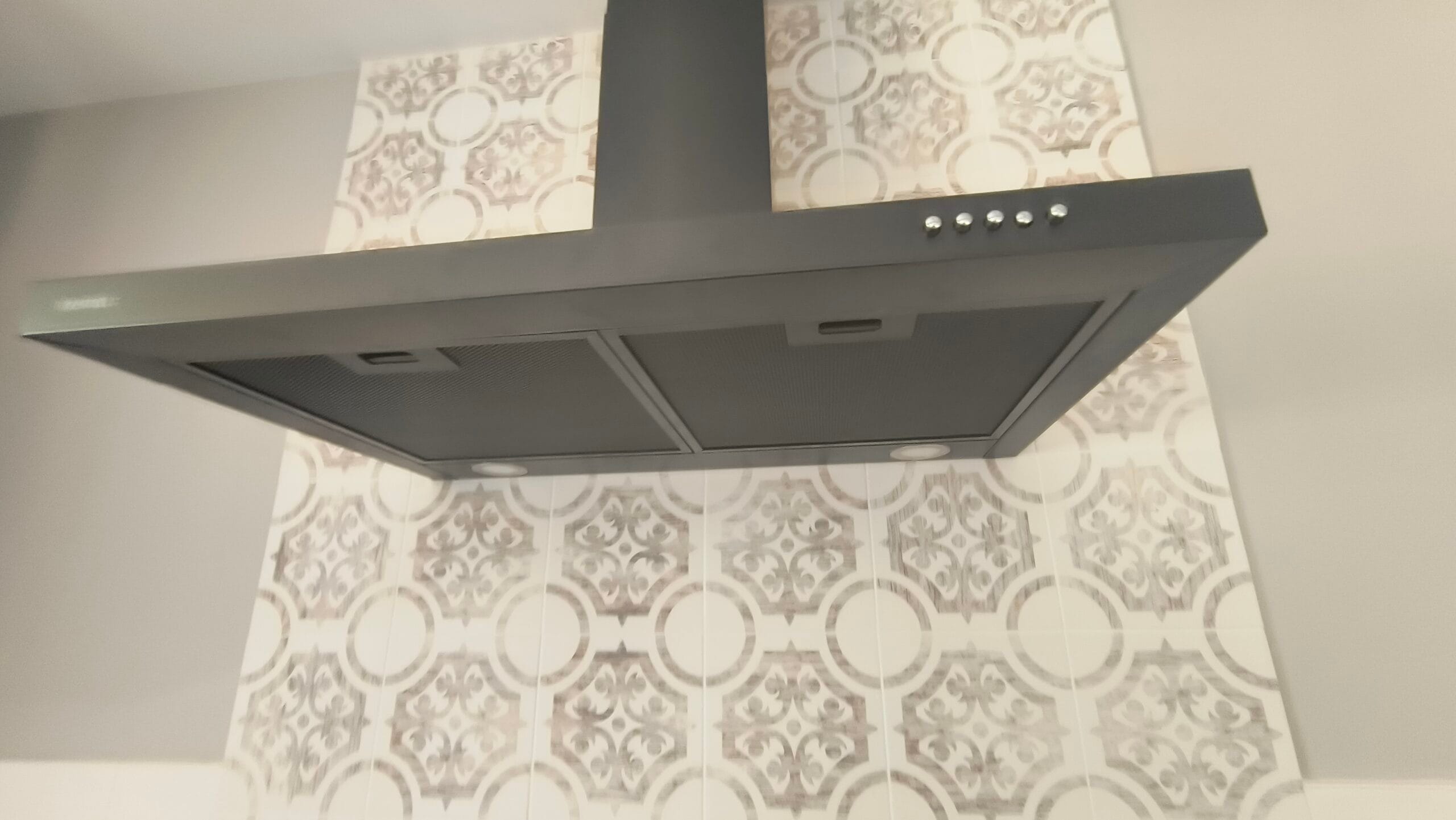
This one surprises people.
They flip the hood on, hear the fan spin up, feel a little air move, and assume the job’s getting done.
It usually isn’t.
A lot of kitchen exhaust fans don’t actually exhaust anything. They just move air in a circle and call it a day.
What a Kitchen Exhaust Fan Is Supposed to Do
A real kitchen exhaust fan should do one thing well: move heat, moisture, grease, and combustion byproducts out of the house.
That means:
- Capturing the air above the cooktop
- Ducting it to the exterior
- Discharging it outside — not into an attic, not into a wall cavity, not back into the kitchen
If it doesn’t leave the building, it’s not exhaust. It’s a noise machine.
Where Things Go Wrong
The most common setup I see is a recirculating hood with a charcoal filter. No duct. No exterior termination.
Those units:
- Don’t remove moisture
- Don’t remove heat
- Don’t remove grease vapor
- Don’t remove combustion byproducts from gas ranges
They mask odors. That’s it.
A Real Inspection Where the Fan Was Lying
I inspected a home near Pinson where the kitchen looked clean and updated. New cabinets. New hood. Stainless everything.
Turned the fan on and followed the duct.
There was no duct.
The hood was dumping air straight back into the kitchen after passing through a grease-saturated filter. Grease residue was already visible on the upper cabinets.
That’s not ventilation. That’s redistribution.
Why Grease Is the Real Problem
Grease doesn’t disappear when it’s warm. It floats. Then it cools. Then it sticks.
Over time, grease vapor:
- Coats cabinets
- Builds up on walls and ceilings
- Settles inside the hood housing
- Accumulates on filters and fan blades
That buildup becomes fuel.
I’ve reviewed inspection photos from one of our inspectors near Medina where grease accumulation inside a recirculating hood was thick enough to drip. One flare-up on the cooktop would’ve had a path straight into the cabinet cavity.
Gas Ranges Raise the Stakes
With gas appliances, poor venting isn’t just messy — it’s unhealthy.
Gas cooking produces:
- Moisture
- Nitrogen dioxide
- Carbon monoxide in small amounts
- Combustion byproducts you don’t want lingering
If the fan doesn’t vent outside, all of that stays in the house.
Where Fans Often Dump Instead
Even when there is ducting, I see bad terminations:
- Into the attic
- Into a soffit
- Into a wall cavity
- Into a ceiling space between floors
Those setups just move the problem somewhere else — usually where you can’t see it.
Grease plus insulation plus time is not a great combination.
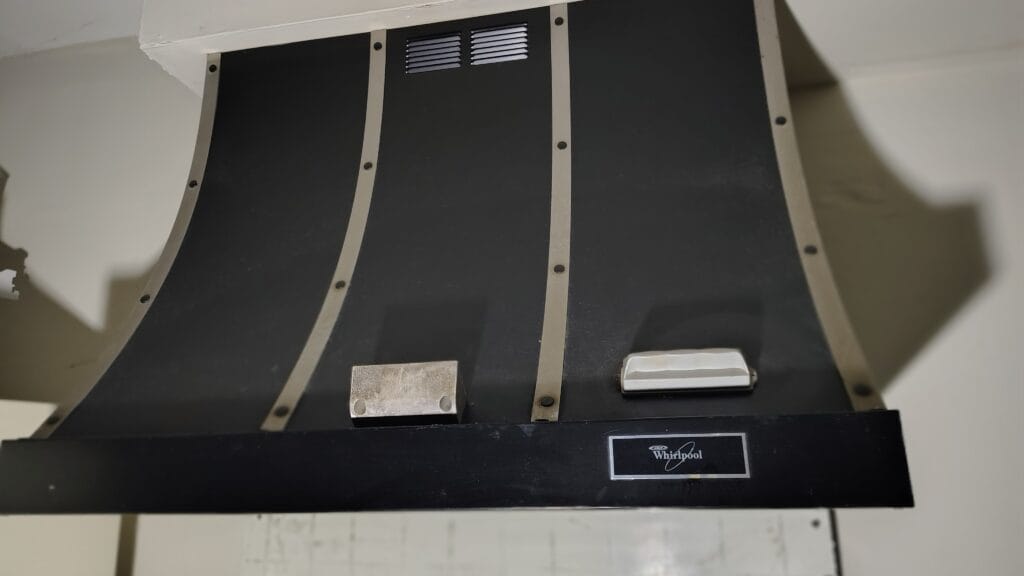
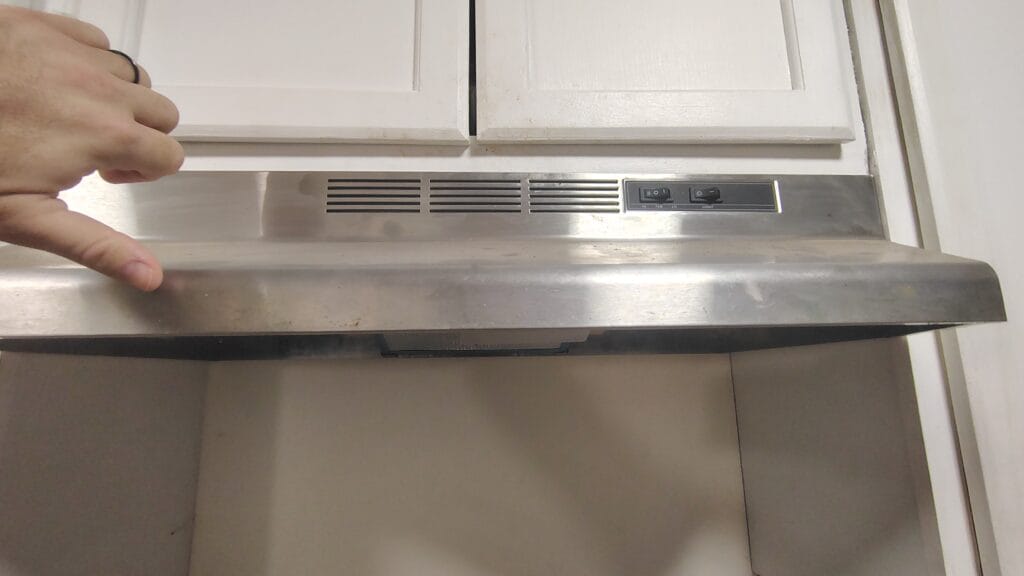
What I Actually Check During an Inspection
I don’t just turn the fan on and listen.
I:
- Look for actual ducting
- Trace where it goes
- Verify exterior termination
- Check damper operation
- Look for grease buildup
- Note recirculating-only designs
If I can’t confirm exterior venting, that gets called out clearly.
What Buyers Should Understand
A recirculating fan isn’t “wrong” by default — but it’s a compromise.
If you cook a lot, use gas, or care about indoor air quality, exterior venting isn’t a luxury. It’s function.
Upgrading later is possible, but it’s easier to understand what you’re starting with before you move in.
The Inspector’s Bottom Line
If your kitchen fan doesn’t send air outside, it’s not protecting your cabinets, your air, or your safety — no matter how modern it looks.
Ventilation that goes nowhere eventually leaves its mark everywhere else.
That’s why I follow the duct, not the brochure.