
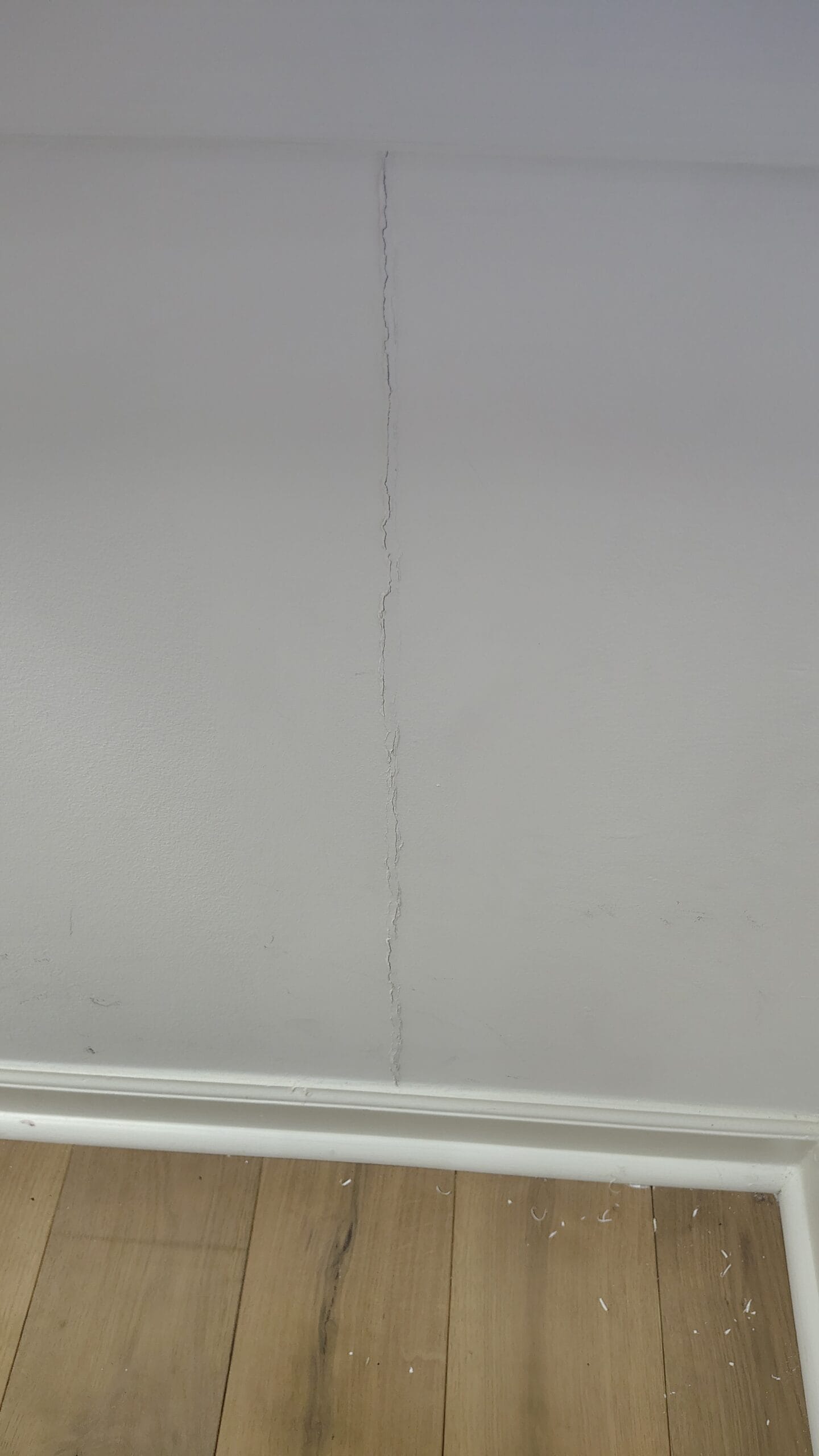
Drywall cracks are one of those things everyone notices — and almost no one understands.
Some are nothing.
Some are everything.
Most live somewhere in between.
The mistake is treating them all the same.
Not All Cracks Are Created Equal
Houses move. Always have. Always will.
Materials expand. Wood dries. Temperatures swing. Foundations settle a little when they’re young and a little when the seasons change.
That kind of movement leaves behind:
- Hairline cracks
- Slight separations at corners
- Minor tape lines that show up over time
That’s normal aging.
Structural movement leaves different fingerprints.
The Cracks That Make Me Pause
Certain cracks slow me down immediately:
- Wide cracks you can fit a coin into
- Cracks that reappear after being patched
- Stair-step cracks in drywall or masonry
- Cracks that run from corners of doors or windows
- Multiple cracks pointing in the same direction
Those aren’t cosmetic until proven otherwise.
A Real Inspection Where the Pattern Mattered
I inspected a home near Bolivar where the seller had recently “touched up” the walls. Fresh paint everywhere. Looked clean.
But the cracks told a story paint couldn’t hide.
Vertical cracking above doorways. Horizontal cracking near the ceiling. Matching cracks on opposite sides of the house.
Crawlspace inspection confirmed it — uneven settlement along one side of the foundation.
Those weren’t drywall problems. They were symptoms.
The Cracks That Usually Don’t Worry Me
On the flip side, I see plenty of cracks that sound scarier than they are:
- Small corner cracks at door frames
- Nail pops in ceilings
- Hairline cracks along taped seams
- Minor cracking near stairwells
These show up in almost every house after a few years. Especially newer builds drying out.
Context matters.
Why Location Is Just as Important as Size
Where a crack appears often matters more than how big it is.
Cracks that concern me most tend to:
- Mirror each other across rooms
- Line up vertically between floors
- Follow structural lines
- Appear near load-bearing walls
- Coincide with sloping floors or sticking doors
A single crack might be nothing. A pattern rarely is.
Why Fresh Paint Doesn’t Fool Me
Fresh paint doesn’t fix movement. It just hides it temporarily.
I’ve lost count of how many times I’ve run my hand over a wall and felt a crack that the eye couldn’t quite see yet.
If the structure is still moving, the drywall will eventually tell on it again.
What I Look For Beyond the Wall
Drywall cracks never get evaluated in isolation.
I’m correlating them with:
- Floor slope
- Door and window operation
- Exterior foundation condition
- Crawlspace or basement observations
- Moisture levels and drainage
Cracks are clues. The house is the case file.
What Buyers Should Understand
Drywall cracks aren’t automatic deal-breakers.
But they’re also not something to shrug off with, “That’s just settling,” without checking.
Sometimes they mean:
- Cosmetic repair
- Normal aging
- Minor adjustment
Sometimes they mean:
- Foundation movement
- Structural correction
- Drainage problems
- Ongoing settlement
The difference is worth knowing before you own the house.
The Inspector’s Bottom Line
Drywall doesn’t crack randomly.
It cracks because something moved — or is still moving.
My job isn’t to scare you or calm you down. It’s to figure out which kind of movement you’re dealing with, and whether it stopped years ago or is still happening right now.
That distinction is everything.